
A concrete resurfacer can give a sound but ugly slab a fresh wearing surface without the cost and disruption of tearing it out. It will not stabilize a sinking slab, cure a drainage problem, or make moving cracks disappear. If your patio has shallow surface wear but feels solid underfoot, resurfacing is worth considering. If one side of a crack sits higher than the other, find out why before buying a bag.
The number I would establish first is square footage: length times width. Then check the product label for coverage at the thickness you need. A thin cosmetic coat and a deeper repair use very different amounts of material, and advertised coverage is not a promise for your rough, patched-up driveway.
What a concrete resurfacer actually does
Concrete resurfacer is generally a cement-based overlay mixed with water and applied over existing concrete. It is meant to bond to the slab and create a new surface, not replace the slab's structural strength. Products vary in permitted thickness, surface preparation, working time, and suitable locations. Read the specific instructions before assuming a patio product belongs on a garage floor or driveway.
A good candidate has surface scaling, shallow pitting, or a worn appearance, with a stable base and drainage that already works. A bad candidate has widespread loose concrete, recurring deep cracks, significant movement, or water regularly collecting against the house. An overlay follows the shape underneath; it is not a practical way to rebuild a badly sloped slab.
Tap questionable areas with a hammer. A hollow sound can indicate a loose layer, though it does not tell you the full extent of the problem. Remove loose material and investigate before covering it. If the slab is heaving, sinking, or cracking through its full depth, bring in a qualified concrete contractor or structural engineer to diagnose the cause.
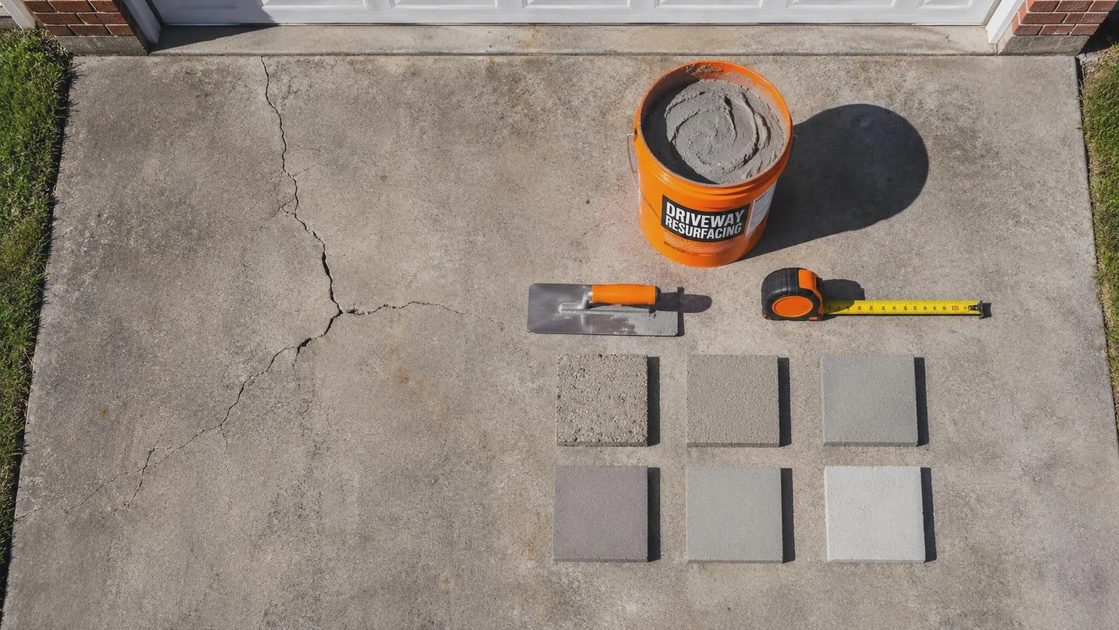
Prep is where the job succeeds or fails
The biggest mistake is treating cleaning as a quick rinse. Dirt, oil, paint, sealers, and weak concrete can prevent a bond. Pressure washing can remove grime and loose material, but pressure washing alone may not remove a sealer or oil that has soaked in. Mechanical grinding or other preparation may be necessary; follow the product's requirements for a clean, sound, suitably rough surface.
A simple water-drop check can flag a potential problem: if water beads instead of soaking in, a coating or contaminant may be present. It is not proof that the slab is ready if the water absorbs. Existing surface treatments still need to be identified and removed as required.
Repair deeper holes and cracks with a compatible repair material before applying concrete resurfacer. Follow the repair product's curing instructions; do not assume a patch made this morning can be covered this afternoon. Hairline cracks may show through again if the slab continues to move. An overlay is a finish, not a crack-control system.
Keep existing expansion and control joints open through the new surface. Those joints are there to accommodate movement or direct cracking. Filling them flush with a rigid overlay can create a new crack where you least want one. For joint sealant, use a compatible product after the resurfacing has cured as directed.
How to apply it without making a mess
Check the forecast and the bag before mixing. Temperature limits, sun, wind, and rain all matter. A hot slab can shorten working time; rain or freezing conditions can damage a fresh application. Some products require the concrete to be damp but free of standing water. Others have different preparation instructions, so use the manufacturer's directions rather than a generic rule.
Measure the water for each batch. Adding extra water to make a mix easier to spread can weaken the finished surface or change its appearance. Mix only what you can place within the stated working time, and have the right mixing paddle, buckets, squeegee, and finishing tools ready before opening the bag.
Work in manageable sections, preferably ending at existing joints or natural breaks. For a larger slab, a helper mixing the next batch while another person spreads can prevent obvious transitions. Do not feather a product thinner than its permitted minimum just to stretch the bag.
For exterior walking surfaces, follow the product's instructions for a slip-resistant finish, often made with a broom while the material is still workable. A smooth finish can get slick when wet. Protect the area from foot traffic, vehicles, and weather for the specified cure period; those waiting times may be different.
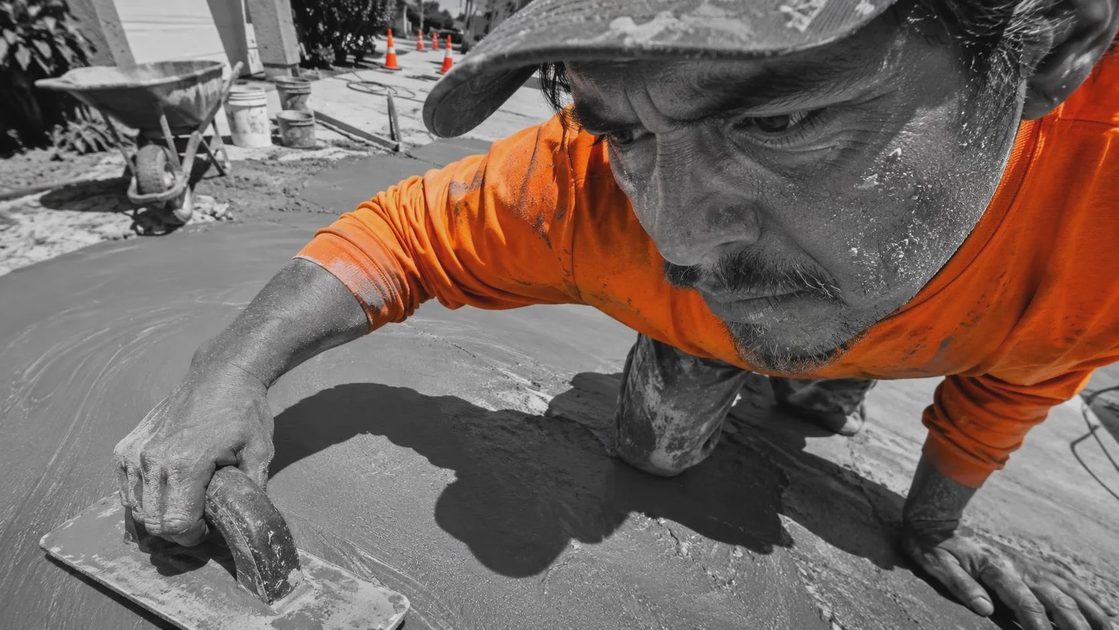
What to budget for concrete resurfacer
For a 10-by-20-foot patio, the area is 200 square feet. Divide 200 by the label's coverage per bag at your planned thickness, then round up. For example, if the label specifies 40 square feet per bag at that thickness, the arithmetic gives five bags before allowing for waste or an uneven surface. That is an example calculation, not a coverage claim for every product.
The bags are only one line item. Add compatible patch material, cleaning supplies, mixing tools, a squeegee, a broom, and any equipment rental needed for surface preparation. If you need to remove an old coating or grind a large area, that prep can change the economics quickly. Local labor and equipment rates vary, so a contractor's written estimate is more useful than a national price-per-square-foot guess.
Ask whether the quote includes coating removal, crack repair, joint treatment, cleanup, and protection during curing. Also ask what happens if grinding reveals loose concrete underneath. A low bid that excludes those steps can turn into an expensive change order. Get the scope in writing. Always.
When to hire out or replace the slab
A small, accessible patio with minor surface damage is a reasonable DIY candidate if you can prepare it properly and finish each batch before it sets. A large driveway is less forgiving: the surface must support vehicle use, the finish has to be consistent, and access may be restricted while it cures. A contractor with the right equipment can make sense there, especially if grinding is required.
Replacement deserves a quote when the concrete is extensively broken, unstable, or badly pitched. It is a bigger project, but repeatedly covering a slab that continues to move is not a savings plan. If movement is tied to drainage or soil conditions, address that cause as part of the repair, not after the new surface fails.
Before you buy anything, measure the slab and mark every crack, hollow spot, and low area where water sits. Take those notes and photos to a concrete contractor or product supplier, and ask whether the proposed system is appropriate for the slab's condition and intended use.
No comments yet — be the first to share a thought.