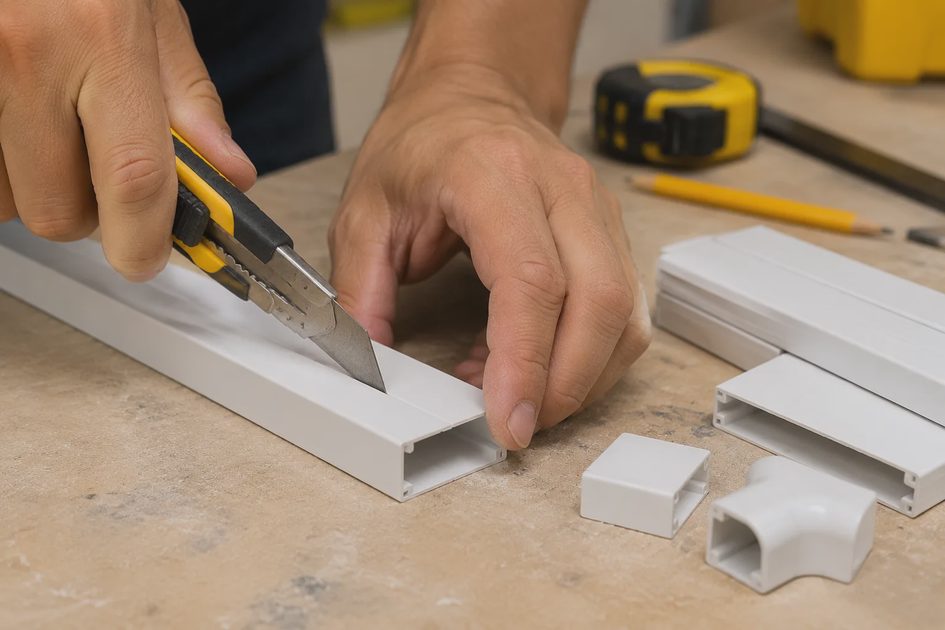
After 17 years in renovation work, I've learned that cable management often becomes an afterthought once the major work is finished. You hang a TV, add a few outlets, or run power to a new desk, and suddenly you have a tangle of cords hanging down the wall. Tape looks temporary. Nail-in clips look cheap. Opening the wall for conduit is expensive and slow. That is why I started using a simple cable raceway on recent projects. It is a paintable plastic cord cover that hides the wires without major demolition, and it has become one of the more practical tools in my finishing kit.
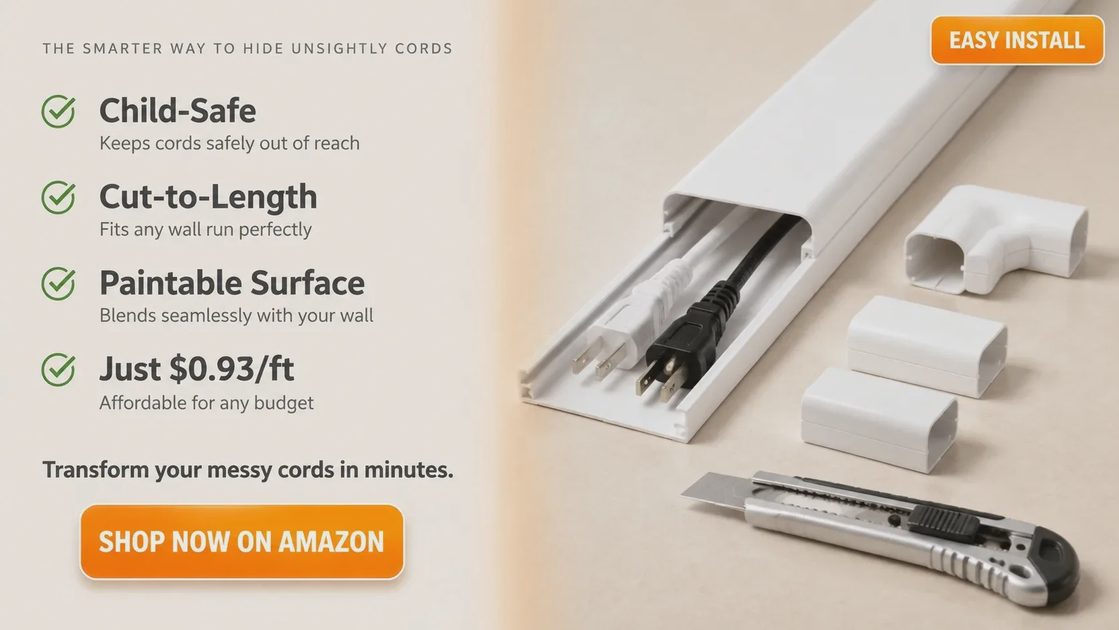
The YesBes 116-inch kit I used totals about 116 inches of channel, comes in white, and includes couplings and corner pieces. The inner dimensions are roughly 0.96 inches wide by 0.57 inches high—enough for roughly two to three typical cables, depending on cable thickness. It is designed as an indoor wall cable cover with self-adhesive backing so you can stick it in place without drilling a row of holes. Over the past 30 days the price of this YesBes 116in Cord Hider Kit has stayed steady at $8.99, which works out to about . Among similar wall cable raceway products, this kit sits at the notably low end—similar options I checked were generally around $1 per foot.
Check Price & Reviews on Amazon
Why Exposed Cords Are Still a Problem
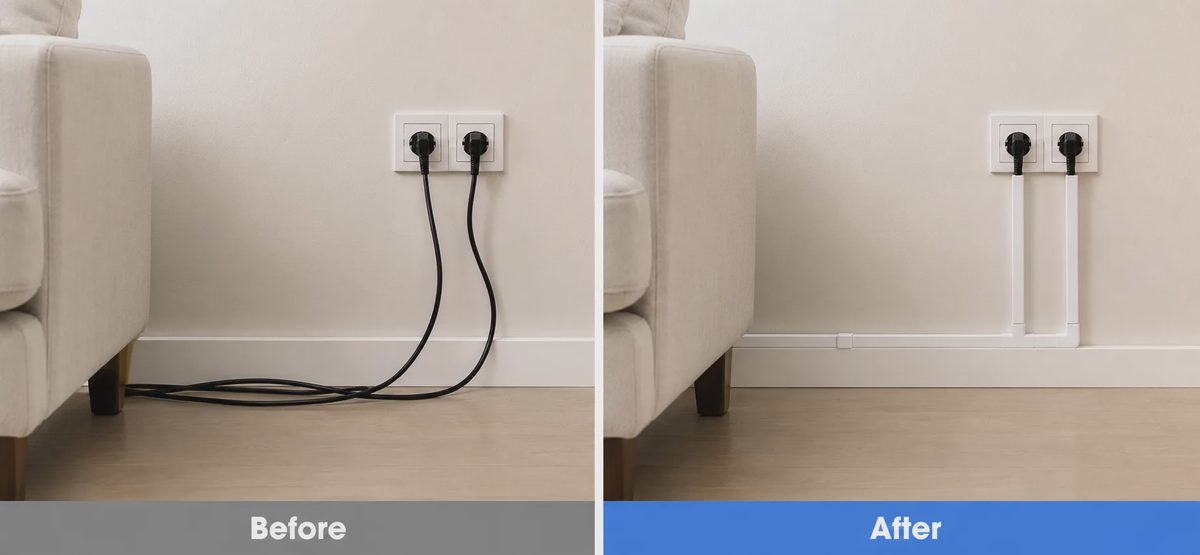
In older houses the electrical layout is rarely perfect. When you add a wall-mounted TV, a new desk setup, or extra outlets, the wires often end up running on the surface. Leaving them loose looks unfinished and creates a trip or snag hazard—especially if kids or pets are around. Temporary fixes with electrical tape or plastic clips rarely last through the first year of normal use.
As someone who focuses on hard finishes and clean hand-offs, I want a solution that is fast, easy to install and simple to modify before committing to a permanent-looking cable route, and neat enough that the homeowner does not notice the wires every time they walk into the room. A good cable raceway for wall-mounted TV setups hits the sweet spot: it looks better than tape, requires far less work than cutting into the wall, and keeps cords neat and organized on smooth indoor surfaces.
What You Actually Get and How It Feels on Site
The product is a white plastic channel with a snap-on cover. Sections can be cut to length with a sharp utility knife or fine saw. The adhesive backing sticks well to smooth, clean drywall or painted surfaces. The kit includes straight couplings and corner fittings so you can turn corners or join runs without leaving gaps.
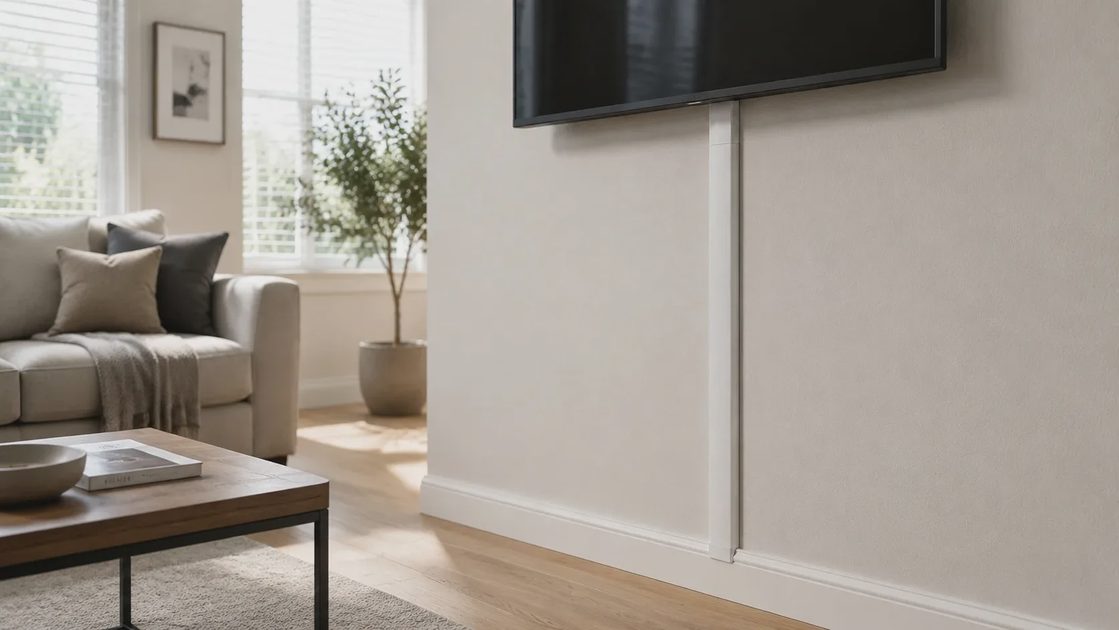
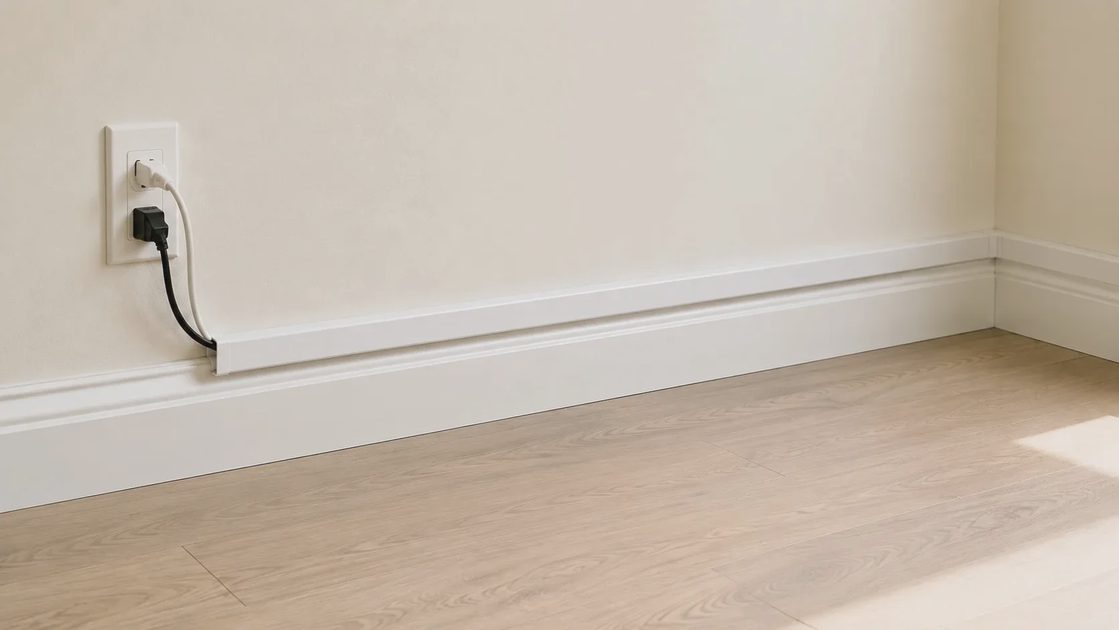
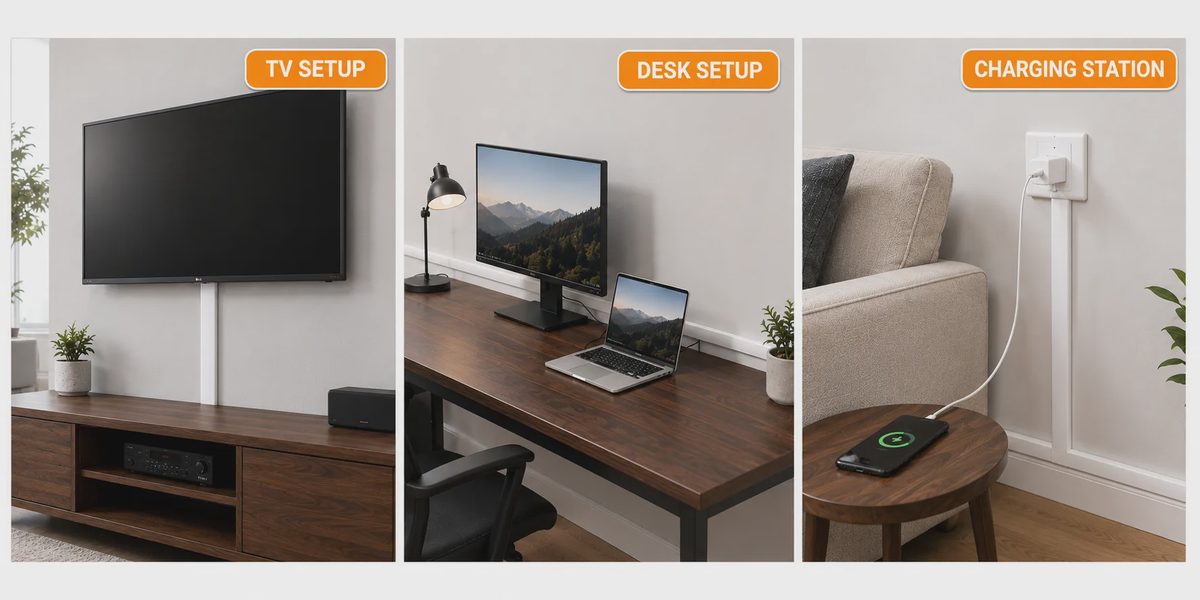
On the jobs where I have used it, the most common applications were the vertical drop behind a wall-mounted television and the short horizontal run along a baseboard to reach an outlet. In both cases the wall cable cover cleaned up the visual mess without adding bulk.
Detail | Observation |
|---|---|
Material | White plastic |
Total length | Approx. 116 inches |
Inner size | Roughly 0.96 in W × 0.57 in H |
Typical capacity | 2–3 standard cords |
Mounting | Self-adhesive |
Features | Cuttable, paintable, indoor use |
Check Price & Reviews on Amazon
Who This Cable Raceway Is Best For
Best for:
Smooth, clean painted walls or drywall
Hiding 2–3 standard power or signal cords
Vertical drops behind wall-mounted TVs
Short horizontal runs along baseboards
Light remodeling where in-wall conduit isn't practical
Not ideal for:
Textured, stucco, or heavily orange-peel walls
Thicker bundles that prevent the cover from closing properly
Outdoor use (moisture and UV degrade the plastic and adhesive)
Situations where the channel may need frequent removal (residue or paint damage)
Permanent in-wall electrical wiring
What I Like Most About This Cable Raceway
It solves a finishing problem without creating a construction project.
On a recent TV install, the wall was already painted and the client was moving in the next day. The cables needed to be hidden, but cutting into the wall for conduit was out of the question. Opening the drywall would have meant patching, sanding, and repainting—easily half a day of work. With this raceway, I measured, cut, stuck it on, ran the cables, and snapped the cover shut. The whole job took about ten minutes. No dust, no drywall repairs, no repainting. For that specific moment—walls finished, client incoming—that speed and cleanliness were the whole point.
It looks cleaner than tape or clips without pretending to be something it isn't.
Tape and nail-in clips have always felt like a temporary fix. They leave cables exposed and visible, and they don't hold up well over time. The raceway gives the cables a defined path, and the white plastic blends reasonably well with painted walls—even before paint. Once painted to match, it doesn't scream "afterthought." It looks intentional, which is exactly what you want in a finished room.
It adapts to real-world wall runs without needing special pieces.
Wall runs are rarely a perfect straight line. On a recent desk setup, I needed to drop down from the TV, turn a corner, and run horizontally to the outlet. The included corner fittings and couplings let me do that without leaving gaps. Being able to cut the channel on site meant I didn't have to order custom lengths or make do with something that didn't fit. For short runs—TV drops, baseboard stretches, desk setups—that flexibility matters.
The cost makes sense for the labor it saves.
At $8.99 for the kit, I'm not thinking twice about using one on a finishing job. Compared with the added labor, dust, and repair work involved in opening a finished wall, the upfront cost makes sense for small cable-management jobs. It's not a replacement for permanent wiring, but for cleaning up exposed cords on a finished wall, the cost-to-result ratio is hard to argue with.
How It Compares with Older Methods
The traditional options have always been electrical tape, plastic cable clips, or cutting into the wall for proper conduit. Tape looks temporary and collects dust. Clips leave the wires visible and can pull out of drywall over time. Full conduit is the most durable solution but costs more in labor and creates more dust and expense. This cable raceway sits between those extremes: neater than tape or clips, faster and less invasive than opening the wall. For many residential finishing tasks that balance is exactly what is needed.
The Bottom Line
After years of dealing with exposed wires on older houses, I keep a few of these kits in the truck for the finishing stage. They're not a substitute for in-wall wiring, but they solve the visible mess that clients notice the moment they walk in.
Would I recommend it?
Yes — if you're working with smooth indoor walls, 2–3 standard cords, and short runs behind a TV, desk, or baseboard.
No — if you have thick bundles, textured walls, outdoor exposure, or need permanent wiring.
For a relatively low upfront cost, it solves a problem that can otherwise require more invasive work. Cut it to length, paint it to match, and install it without turning a small finishing job into a larger project. For TV drops, desk setups, and short baseboard runs on finished indoor walls, that's where I find it most useful.

No comments yet — be the first to share a thought.