
PEX tubing is a flexible plastic water-supply pipe that can make an old-house repipe less destructive than a rigid-pipe installation. It isn't a universal fix, and the pipe itself is only part of the bill. For most homeowners replacing corroded supply lines, the sensible first step is a permitted quote that spells out the pipe system, access holes, pressure test, and wall repairs.
The big advantage is routing: a plumber can often snake longer runs through framing with fewer connections hidden in walls. The catch is that old houses rarely offer a clean path everywhere. Expect some opening up, especially around crowded bathrooms, tight crawl spaces, and the point where new pipe meets old.
Where PEX makes sense in an old house
PEX tubing is commonly used for hot and cold potable water distribution. It can be a practical replacement for galvanized steel supply lines when aging pipe is restricting flow or leaking. Replacing a short visible section alone may not solve poor flow if the remaining galvanized pipe is also corroded inside.
It can also be useful for a bathroom addition where you want to route new supply lines through existing framing. Its flexibility reduces the need for some directional fittings, though it does not eliminate fittings or the need to protect the pipe from screws, nails, and abrasion.
Don't confuse water supply with drain work. PEX is not a substitute for a leaking waste line, sewer lateral, or vent. If the plumber finds problems in both systems, ask for separate line items; otherwise, a repipe quote can get mistaken for a whole-house plumbing overhaul.
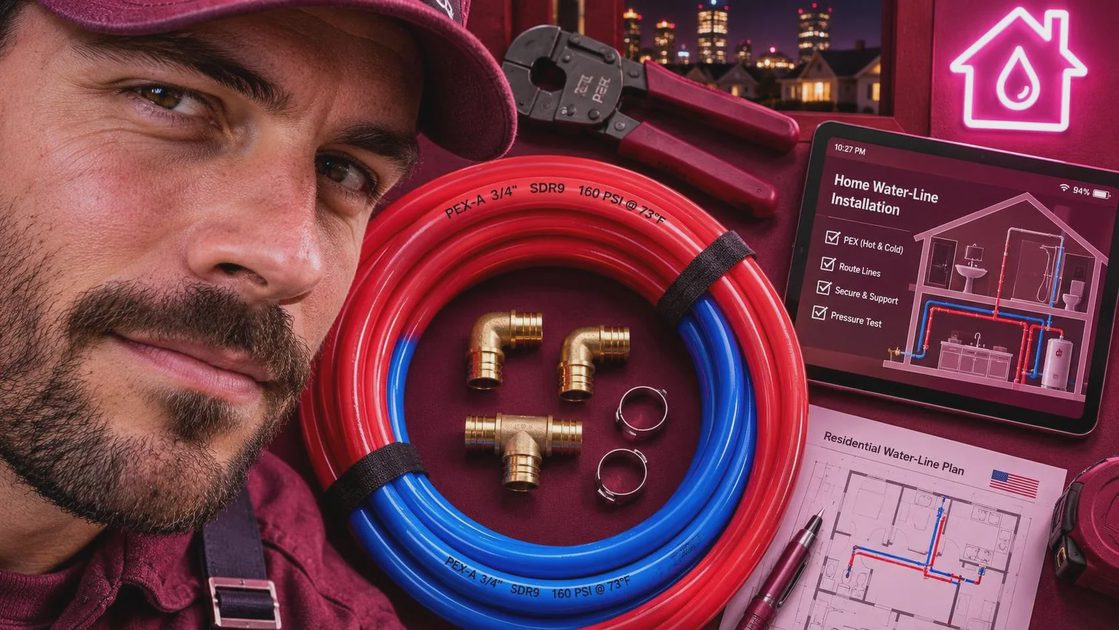
PEX-A, PEX-B, and the fittings that matter
The A and B labels refer to different manufacturing methods. Both can be suitable for residential plumbing when the specific pipe and fittings are approved for the application. Don't buy based on the letter alone: choose an installation system your plumber knows and that your local jurisdiction accepts.
PEX tubing connections generally use either expansion fittings or insert fittings secured with a crimp ring or clamp. Expansion systems require compatible pipe and fittings; crimp and clamp systems also depend on parts and tools that match the manufacturer's instructions. These are not a mix-and-match bin of interchangeable pieces.
Crimping typically requires a properly sized tool and a gauge to check the finished connection. Expansion connections require the correct expansion tool and fittings. Push-to-connect fittings are another option where approved, but they still require correct pipe preparation and insertion. They aren't an excuse to bury an improvised repair without checking the fitting's instructions and local rules.
Red and blue pipe can make hot and cold lines easier to identify. Color by itself doesn't establish quality, sizing, or compatibility. Read the printing on the pipe and confirm it's marked for potable water.
Size, layout, and water pressure
A plumber may use a larger main distribution line and smaller branches to fixtures, but pipe size should be based on the house's demand, developed length, available pressure, and applicable code. Don't assume replacing every old pipe with the same nominal size will produce the same flow: fittings and internal diameters can differ by system.
PEX tubing can be arranged in a trunk-and-branch layout or in individual runs from a manifold. A manifold can make individual fixtures easier to isolate, but it may require more pipe and a location that remains accessible. A straightforward trunk-and-branch layout can be a better fit when space and budget are tight.
Before choosing either layout, have the plumber check the water pressure and ask about the condition and size of the incoming service line. A shiny new distribution system won't fix a restriction upstream. If hot water takes too long to arrive, discuss the route and distance from the heater as well; replacing pipe alone doesn't guarantee a shorter wait.
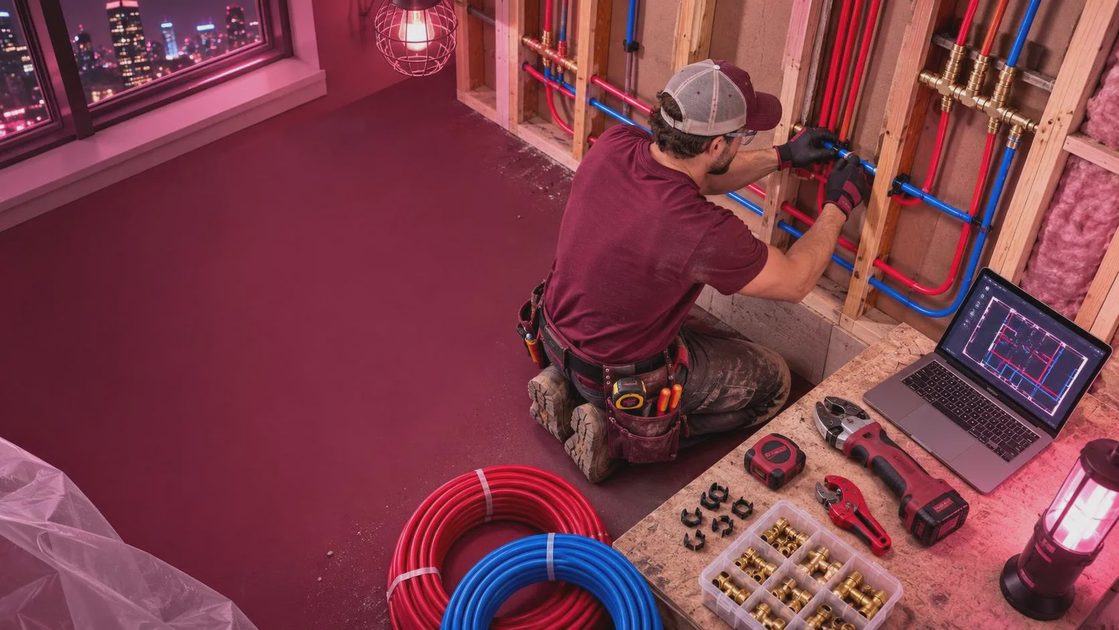
Exposure, freezing, and old-house surprises
PEX tubing needs protection from conditions its manufacturer doesn't permit. Ordinary PEX generally should not be left exposed to sunlight, so plan a suitable covering or another approved material for exposed exterior runs. Follow the product's instructions for any permitted construction-stage exposure, too.
Freezing is another problem, even though the material can flex. Expansion is not a guarantee against burst pipe, damaged fittings, or water damage. Keep supply lines within conditioned space where practical, insulate vulnerable areas as required, and ask how the installer will handle crawl spaces and exterior walls.
Old framing brings its own trouble. Avoid sharp edges and respect the pipe's specified bend radius and support spacing. Where a line passes through framing near a surface, protective plates may be necessary to guard against fasteners. Penetrations through fire-rated assemblies also need the appropriate approved treatment.
At a water heater, follow local code and the equipment and pipe manufacturers' instructions for connections and clearance from heat sources. Don't assume flexible plastic can connect directly in every installation.
What a repipe quote should include
PEX tubing is relatively inexpensive compared with opening walls, working around old framing, and restoring finishes. That makes a per-foot pipe price a poor way to compare whole-house bids. Labor, access, local permit costs, fixture count, and the condition of existing plumbing can change the total substantially.
Ask each contractor to identify the pipe and fitting system, which fixtures and branches are included, and whether the incoming service line is part of the job. The quote should also describe shutoff valves, connection to existing materials, required permits, inspection, and pressure testing. Ask whether old lines will be removed or abandoned and how water service will be maintained during the work.
Finally, get the restoration scope in writing. Cutting access holes may be included while plaster repair, tile, paint, and cleanup beyond basic debris removal are not. In an old house, matching a textured plaster wall can be its own trade and its own bill.
A handy homeowner may be comfortable with an accessible repair, but a whole-house repipe involves sizing, concealed connections, permits, and coordination with existing systems. Before buying a coil or signing a bid, ask your local building department what the project requires, then request an itemized scope from a licensed plumber. Get it in writing. Always.
No comments yet — be the first to share a thought.