
A kids homework station sounds like a small weekend project. Then you discover the only available wall is plaster, the outlet is two feet too far away, and your child needs a Chromebook, three binders, art supplies, and somewhere to put a half-eaten granola bar. I have built enough family work areas to know that a useful kids homework station is less about Pinterest styling and more about location, lighting, durable surfaces, and having a place for every item.
The good news is that this does not need to become a $3,000 built-in. A practical setup can cost $150 to $500 if you use an existing wall and do the installation yourself. Custom cabinets, new electrical work, and finish carpentry can push the same idea past $2,000 quickly. Pretty on the brochure, expensive in real life.
Start With the Wall You Already Have
The best location is usually near the kitchen or family room, not hidden in a bedroom. Kids need supervision, especially during the first years of elementary school, and parents are more likely to help when they are already nearby. In our 1923 Craftsman, we used a narrow dining-room wall that had been wasted beside a built-in cabinet. It was not glamorous, but I could see the kids from the kitchen and hear when the chair started scraping the floor.
Measure the wall before shopping. A 48-inch-wide desk needs at least 54 inches of clear space once you account for trim, chair movement, and a backpack hook. Allow 24 inches of desk depth for writing and a laptop. Eighteen inches looks tidy in a catalog and feels cramped after one worksheet, a pencil cup, and a water bottle land on it.
Before mounting anything, find the studs. In old houses, stud spacing is not always the modern 16-inch pattern, and plaster can hide irregular framing. Use a stud finder, then confirm with a small drill bit. If the desk must float between studs, install a painted plywood backer into solid framing instead of trusting drywall anchors with a heavy shelf.

Choosing Materials That Survive Children
For the desktop, I prefer a 3/4-inch birch plywood panel with iron-on edge banding, a butcher-block offcut, or a laminate countertop remnant. A basic plywood top costs roughly $35 to $75, while a butcher-block section can run $80 to $180. Sand the edges, seal the surface with water-based polyurethane, and accept that it will eventually collect marker lines. A kids homework station is working furniture, not a museum display.
Avoid sharp metal corners and glossy white finishes unless you enjoy wiping fingerprints every afternoon. A satin paint or matte laminate hides abuse better. If you use an IKEA tabletop, anchor it properly; the top itself may be sturdy, but inexpensive legs can wobble when a child leans on the edge. Four simple steel or wood legs usually cost $50 to $100, and adding adjustable feet helps on an uneven old-house floor.
Storage should be reachable without a step stool. A 12-inch-deep wall cabinet is enough for paper, folders, and craft supplies. Open cubbies cost less and make forgotten homework easier to spot, but they also become visual clutter. In our house, two labeled bins worked better than six small compartments. One bin holds school supplies, and the other holds projects that are not finished. That second bin stopped half-built science models from taking over the dining table.
Lighting and Electrical Details Matter
Bad lighting creates squinting, shadows, and complaints that look like laziness. Put the desk near natural light if possible, but do not place a screen directly in front of a bright window. A basic adjustable LED desk lamp costs $25 to $60. Look for a broad shade, a weighted base, and controls a child can operate without knocking the lamp over.
If the existing outlet is behind the desk, use a short power strip with overload protection and secure it under the desktop. Do not let cords hang where a younger child can pull on them. For a permanently mounted station, an electrician can add an outlet at desk height, often for $200 to $500 depending on access, patching, and local labor. In an old house, opening plaster can turn a simple outlet into a repair job, so get that price before cutting.
A monitor or laptop should sit at a height that does not force the child to bend their neck. A $20 laptop stand can solve the problem, but leave enough room for writing. The most expensive ergonomic chair is not necessary at age seven. A stable chair with a seat height that lets both feet rest on the floor is the better starting point.
The Setup I Would Build Again
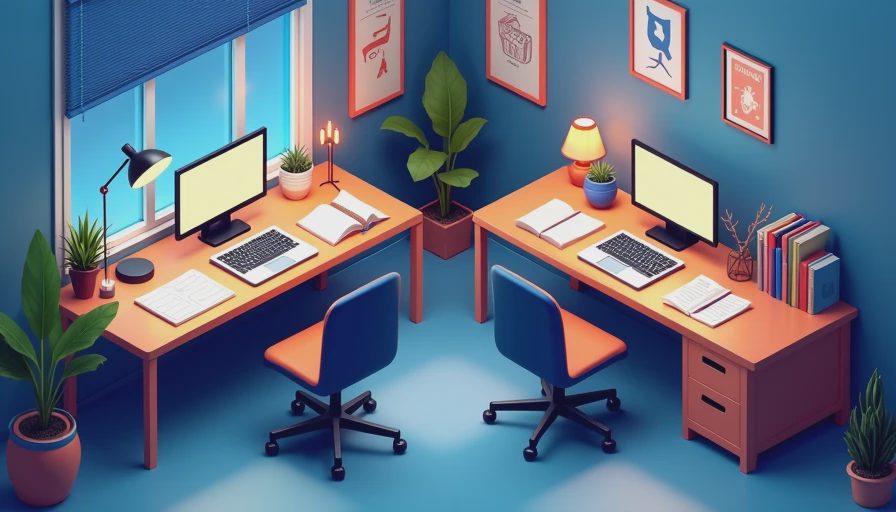
For a straightforward kids homework station, I would use a 48-by-24-inch sealed plywood top, two drawer units or sturdy legs, one adjustable lamp, two storage bins, and three wall hooks. The complete materials budget would be about $275 before paint. I would mount a 24-by-36-inch corkboard or magnetic whiteboard above the desk, leaving at least 12 inches between the surface and the bottom edge so books do not constantly hit it.
I would also leave one empty section. That sounds wasteful, but empty space is what allows the station to handle a poster board, a tablet, or a temporary reading project. Filling every inch on installation day creates a setup that fails as soon as school assignments change.
For younger children, keep scissors, glue, and markers in a removable bin rather than a permanent drawer. For older students, add a charging shelf and a file holder for current classes. The furniture can stay the same while the storage changes. That is a better investment than building a tiny desk that only fits second-grade worksheets.
Mistakes That Cost More Than They Should
The first mistake is building too small. The second is mounting shelves too high because the adult doing the work wants a clean wall. Kids homework station storage should be accessible to the child who uses it, not just visually balanced for a real-estate photograph.
I also once installed a floating desk without testing the wall thickness and framing. The anchors held for several months, then the front edge sagged when a backpack was hung from it. I paid for replacement hardware, a new backer, and a Saturday of patching. I've already paid for this lesson: load-test every mounted surface before handing it over to a child.
Do not skip the chair test. Sit down with your knees under the desk, pull out a notebook, open a laptop, and reach for the lamp. If those movements feel awkward for an adult, they will be worse for a child. Also measure the path from the station to the door. A desk that blocks a hallway or forces backpacks into an exit route is not a successful solution.
A Practical Budget and Final Checklist
A budget kids homework station using a premade desk, lamp, bins, hooks, and a bulletin board can land around $175 to $350. A semi-custom version with a plywood top, painted backer, drawer units, and an electrician-installed outlet usually lands between $600 and $1,200. Built-in cabinets and trim can exceed $2,000 before paint. Those ranges are realistic starting points, not promises from a showroom catalog.
Before buying materials, measure the wall, locate studs, test the chair, and count the devices that need power. Decide whether the child needs supervision from the kitchen. Choose a surface that can be repaired instead of one that only photographs well. Finally, put the budget and scope in writing if someone else is doing the work. Get it in writing. Always.
The best kids homework station is the one that gets used on Tuesday night when everyone is tired. Build for visibility, a comfortable writing area, reachable storage, and easy cleanup. Your next move is simple: tape the proposed desk footprint on the floor tonight and leave it there for two days. If the tape is constantly in the way, change the location before you buy a single board.
No comments yet — be the first to share a thought.