
I've managed over $18 million in renovation budgets. I've seen people save money in smart places and spend money in dumb places. I've done both myself.
Here's what I've learned: there are some things you should never, ever cut from a renovation budget. And there are other things where you can save money without regretting it.
The Three Lines You Should Never Cut
1. Structural Work
This should be obvious, but it's not. I've seen people try to save money on structural repairs. They'll install a smaller beam. They'll skip the engineer. They'll use a post that's not properly footed.
Don't do this. Structural work keeps your house standing. It keeps your family safe. And when it fails, it fails catastrophically.
What to spend: Full cost of engineering, materials, and labor. No shortcuts.
What happens if you cut: Your ceiling sags. Your floors slope. Your walls crack. Or the house collapses. It's not worth it.
2. Roof Replacement
If your roof is failing, replace it. Don't patch it. Don't do a temporary fix. Don't cover it with another layer of shingles and hope for the best.
A failing roof causes water damage. Water damage causes rot. Rot causes structural failure. It's a cascade.
What to spend: A full roof replacement with new underlayment, flashing, and shingles. Use a reputable roofer with proper insurance.
What happens if you cut: Water damage, rot, mold, and eventually structural collapse. Plus your homeowner's insurance may drop you.
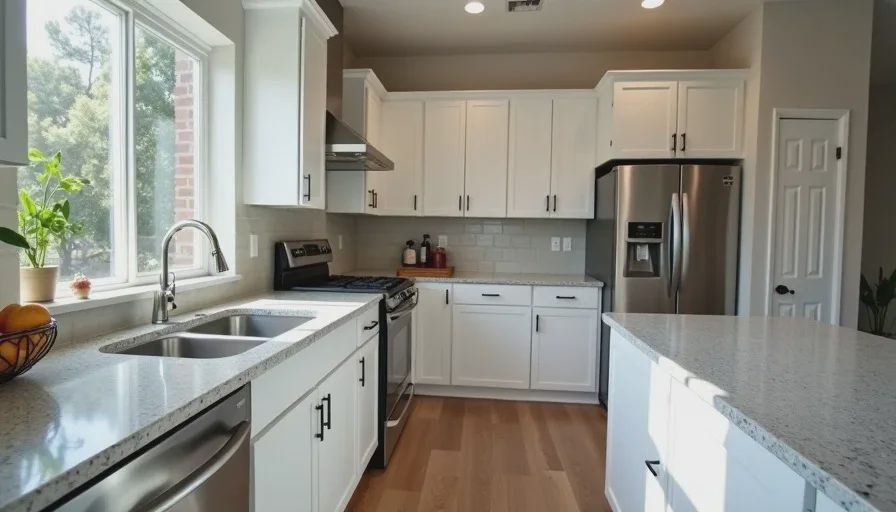
3. Electrical and Plumbing (Hidden Work)
I'm not talking about the pretty fixtures. I'm talking about the stuff behind the walls. The wiring. The pipes. The shutoff valves. The panels.
Cheaping out on these means cheaping out on things that can kill you. Electrical fires. Carbon monoxide from a faulty gas line. Water damage from a burst pipe.
What to spend: New wiring where needed, proper panel upgrades, quality plumbing fixtures behind the walls. Hire licensed pros.
What happens if you cut: Fire. Flood. Death. I'm not exaggerating.
The Five Lines You Can Cut
1. Cabinets
Cabinets are expensive. And the difference between a $6,000 set and a $12,000 set is often just the brand name.
I've used mid-range RTA cabinets in two of my own houses. They're fine. They hold plates. They open and close. They look good.
How to save: Use RTA or semi-custom cabinets. Skip the fully custom route. Choose a standard finish and a standard size.
How much you'll save: 30% to 50% compared to custom cabinets.
2. Countertops
Granite is beautiful. So is quartz. So is marble. But they're expensive.
Laminate has come a long way. The good stuff looks like stone or wood. It wears well. And it costs 80% less than granite.
How to save: Use laminate. Or use a remnant for a smaller island or bathroom vanity.
How much you'll save: $2,000 to $5,000 on a typical kitchen.
3. Appliances
Stainless steel is the standard. But not all stainless is created equal. The $6,000 refrigerator doesn't keep food colder than the $1,800 refrigerator. It just looks nicer.
How to save: Buy scratch-and-dent models. Buy display models. Buy last year's model. Or choose a less popular finish like white or black.
How much you'll save: 20% to 60% on the appliance package.
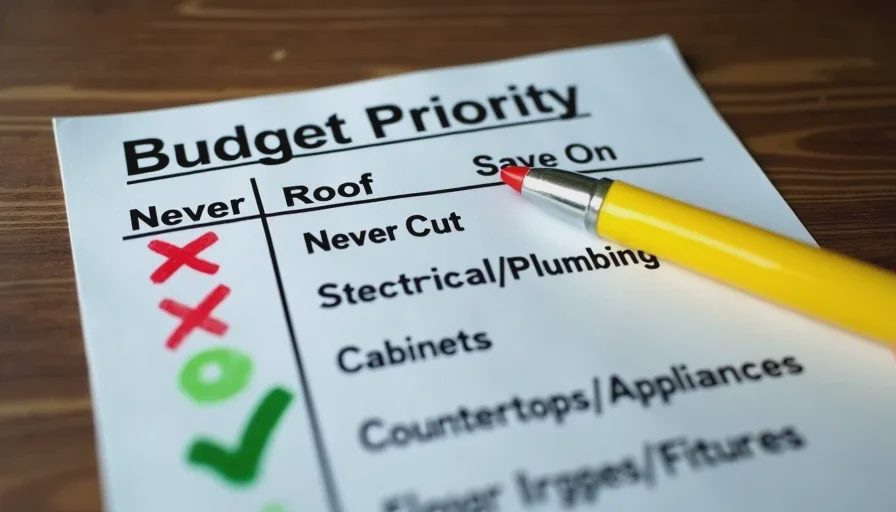
4. Flooring
I've already written about my flooring mistake. The lesson: don't use cheap laminate. But you can use luxury vinyl plank instead of tile. Or you can use engineered wood instead of solid hardwood.
How to save: Use LVP. Use engineered wood. Use a thinner plank or a less expensive species.
How much you'll save: 30% to 60% compared to tile or solid hardwood.
5. Fixtures and Hardware
The $50 faucet and the $300 faucet both deliver water. The $10 doorknob and the $40 doorknob both open doors.
I'm not saying buy the cheapest. But you don't need the most expensive. You need fixtures that work.
How to save: Buy mid-range hardware from a warehouse store. Avoid the high-end specialty brands.
How much you'll save: 50% to 70% on the fixture budget.
The Rule of Thumb
Here's my rule: spend money on things that keep you safe, dry, and warm. Save money on things that look pretty.
That's not a rule that sells cabinets or countertops. But it's a rule that keeps your renovation within budget.
One More Thing
I know some of this sounds obvious. Spend on structure, save on finishes. But I've watched smart people do the opposite. They'll drop $15,000 on a custom kitchen island and then balk at a $2,000 electrical panel upgrade. That's backwards. The panel keeps your house from burning down. The island holds a cutting board. I'm not saying don't buy nice things. I'm saying buy the right things first. Get the bones right. Make the house safe and dry. Then, if there's money left, make it pretty. That order matters. I've seen it matter a hundred times.

No comments yet — be the first to share a thought.