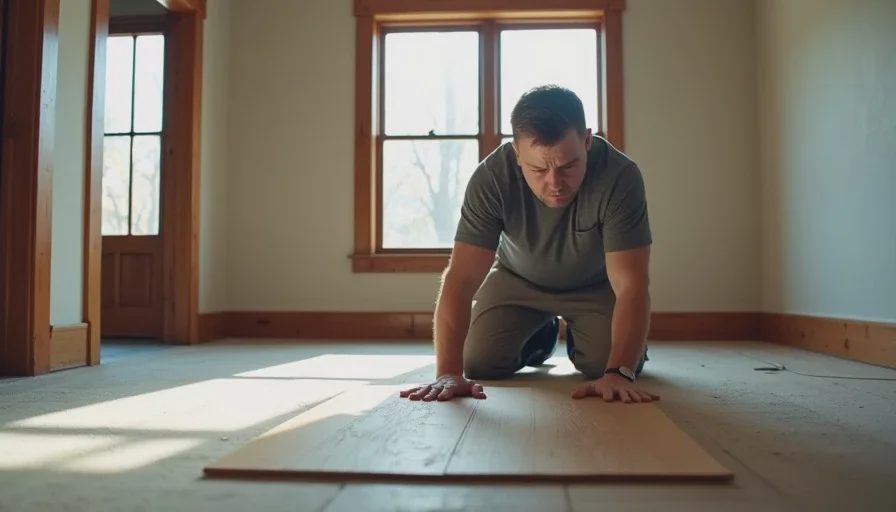
I've made a lot of mistakes in my seventeen years of doing this work. The one that still makes me wince when I think about it? The flooring.
I spent $3,200 on the wrong flooring in my 1923 Craftsman. I paid for the material. I paid for the install. I paid for the removal. I paid for the replacement.
And then I paid to have the whole thing done again properly.
Here's the full story. Learn from my mistake.
The Project
The 1923 Craftsman had original oak floors in the living room, dining room, and hallway. They'd been covered with carpet for thirty years. Under the carpet, the oak was in rough shape—stains, scratches, a couple of burned spots.
Sarah wanted to sand and refinish them. I wanted to save money. I convinced her that a floating floor over the top would be faster, cheaper, and good enough.
I was wrong on every count.
What I Chose
I chose a 7mm laminate floor from a big box store. It was called "Hickory Oak" or something—a fake wood print on a fiberboard core. The price was $2.89 per square foot. The house was about 700 square feet of flooring, so materials were just over $2,000. Installation was $1,200.
Total: $3,200. Seemed like a good deal at the time.
What Went Wrong
The first problem was the subfloor. The laminate manufacturer said the subfloor had to be flat to within 1/8 inch over 6 feet. The old floor in the Craftsman? Not even close. There was a dip in the dining room of nearly half an inch.
I didn't level it properly. I thought the underlayment would compensate. It didn't.
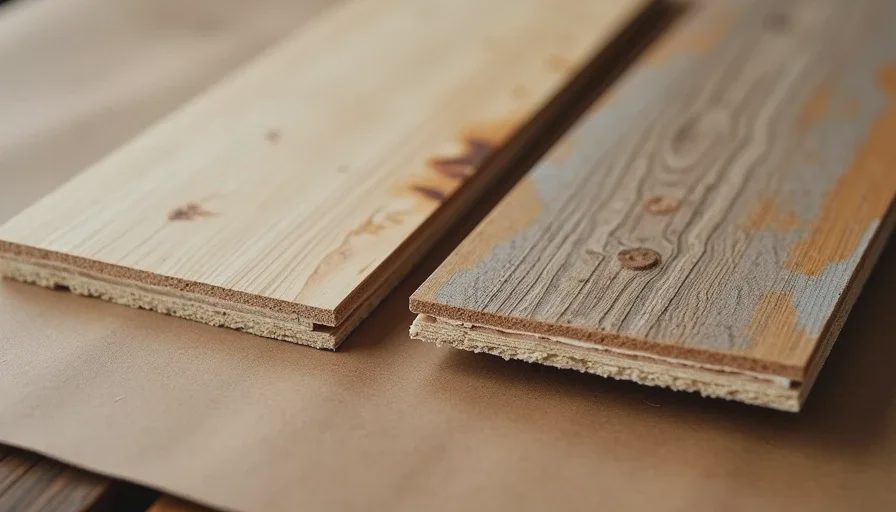
The second problem was the material. Laminate is not waterproof. At all. A spilled glass of water on the laminate sits on the surface, seeps into the joint, and swells the fiberboard core. Once it swells, it's ruined.
We had a water spill in the dining room—just a small one, from a houseplant. The laminate swelled at the joint. The swell was permanent. You could feel it underfoot.
The third problem was the finish. The laminate had a textured surface that was supposed to look like wood grain. It looked exactly like what it was: a cheap synthetic print job. Within six months, the traffic areas were shiny from foot wear, and the edges looked faded.
The Final Straw
Eighteen months after we installed it, Sarah came to me and said, "I can't stand this floor. It's ugly. It's got a hump in the dining room. It squeaks. And it feels cheap."
She was right. All of it.
I looked into our options:
Keep it. Not happening.
Sand and refinish the oak underneath. The oak was still there, covered by the laminate. The problem? The laminate had been nailed down with a pneumatic stapler. There were thousands of staple holes in the oak. Sanding would remove some, but not all. And the laminate glue had seeped through gaps and stained the oak in spots.
Remove everything and replace. That was the only real option.
What It Cost to Fix
Removal of the laminate floor: $800 (labor, plus dump fees)
Staple removal from the oak subfloor: $400 (laborious hand-work)
Sanding and refinishing the original oak floors: $2,800
Stain and finish material: $400
Total to fix: $4,400.
So my $3,200 cheap floor turned into $7,600 total spent on flooring for that room. And that's not counting the six months I spent being annoyed by the squeaky, swollen laminate.
What I Should Have Done
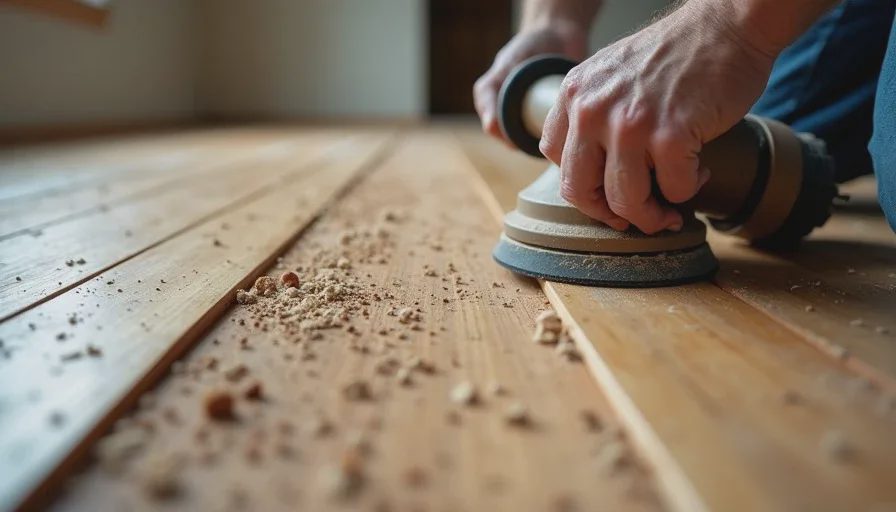
I should have sanded the original floors from the start. The cost would have been $3,000 to $4,000, including staining and finishing. That's about what I spent on the laminate plus the installation.
The oak floors are beautiful now. They're warm. They're original to the house. They're solid. They'll outlast me.
But it cost me twice as much as it should have because I took the shortcut.
The Flooring Lesson
Here's what I learned about flooring:
Don't install laminate in an old house. Laminate is fine in a rental property or a basement. It's not fine in a house with an old subfloor that isn't perfectly flat. And it's not fine in a house where there's any chance of water spills.
Don't cover original wood floors unless you absolutely have to. Original oak, fir, or maple floors are valuable. They add character. And they add value to your house. If they're in salvageable condition, salvage them.
If you must install new flooring, choose luxury vinyl plank (LVP) over laminate. LVP is more expensive ($4 to $7 per square foot), but it's waterproof, wear-resistant, and more forgiving of subfloor imperfections. It's a better product in almost every way.
Prepare the subfloor properly. I didn't. And I paid for it. If you're installing any floor over wood, make sure it's flat. Leveling compound is cheap. Mistakes are expensive.
The Bottom Line
I spent $3,200 on a cheap floor, then spent $4,400 to fix it. I also spent eighteen months feeling annoyed every time I walked into my dining room.
The oak floors are beautiful now. I'm glad we did it. But I'm embarrassed that I didn't just do it right the first time.
I already paid for this lesson. You don't have to.
No comments yet — be the first to share a thought.