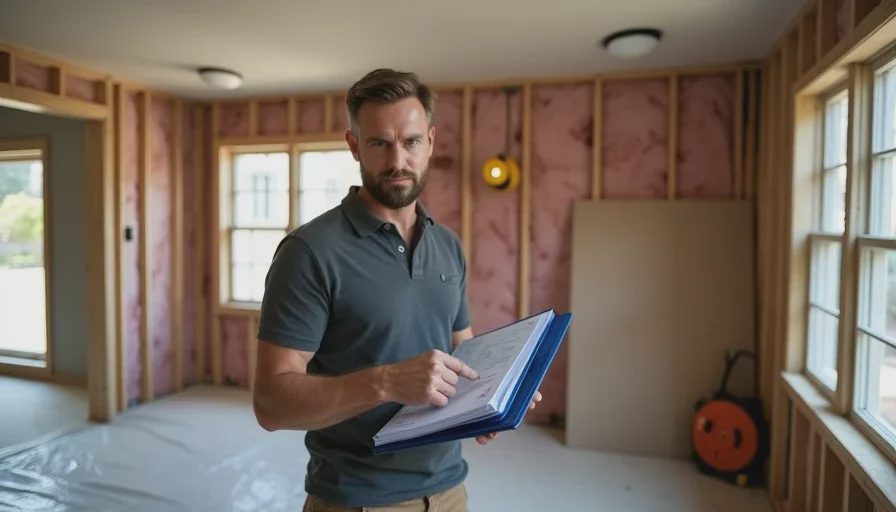
I've spent seventeen years in residential construction. Twelve of those as a project manager running old-house renovations across Southern California. I've overseen gut rehabs of 1920s Craftsman bungalows, 1950s ranch expansions, and everything in between. On weekends, I'm on my third personal fixer-upper in Pasadena.
I started this blog because the renovation advice most people find online swings between Pinterest fantasy and contractor-bashing. And I've got the budgets, the scars, and the three-ring binders full of invoices to prove there's a better way.
What I've Learned the Hard Way
Here's the thing about old houses: they don't care about your vision board. They don't care about your timeline. And they definitely don't care about your budget.
I've written and managed renovation budgets totaling over $18 million across 200-plus projects. I've negotiated with subcontractors, argued with building inspectors, and explained to more than one homeowner why their "quick refresh" just turned into a six-figure gut rehab.
But my real education came from my own houses. Three of them in Pasadena. A 1923 Craftsman. A 1954 ranch. And currently, a 1962 mid-century split-level that's teaching me new lessons every weekend.
Every single one of those projects taught me something I wish I'd known on day one. And I've already paid for every one of those lessons.

The Numbers Don't Lie
Here's what I see over and over in the renovation industry: homeowners who get sold a dream and end up with a nightmare. A bid that looks reasonable. A timeline that sounds manageable. A contractor who seems trustworthy.
And then the walls open up. And suddenly, that $35,000 kitchen is $52,000. That six-week bathroom is twelve weeks. And nobody's surprised except the person writing the checks.
The data backs this up. According to recent industry surveys, nearly half of homeowners go over budget on renovations. 27% exceed it by more than $5,000. The biggest culprits? Materials, labor overruns, and unexpected structural repairs that nobody saw coming because nobody did the homework.
I've been on both sides of that equation. I've been the PM telling a homeowner the bad news. And I've been the homeowner getting the bad news.
What You'll Find Here
This isn't a blog about inspiration. It's not about "you can do it if you believe." It's about what actually works, what actually fails, and what it actually costs.
The Real Number: Line-item budgets from real projects. My own renovations and anonymized client jobs. Cost breakdowns that show you exactly where the money goes — and where it disappears.
Paid For It Already: My mistakes, documented in full detail. Every post is something you don't have to pay for twice. I spent $3,200 on the wrong flooring so you don't have to.
Under the Hard Hat: Technical deep dives on structure, systems, and code. What you need to know before you buy, before you demo, and before you sign a contract.
Family in the Fix: The human side. Living through a renovation with kids. Keeping a marriage intact when the kitchen's gone. The Sunday BBQ on a half-finished deck that still counts as a win.

Your Move
Here's what I want you to do before you read another post: get a notebook. Start a renovation journal. Write down every question you have, every number you hear, every promise a contractor makes. Because the single most expensive mistake you can make is trusting your memory.
I've been doing this for seventeen years, and I still write everything down. You don't get to skip that step just because you're excited about your new kitchen.
The cheapest option is rarely the least expensive. And I've already paid for this lesson. You don't have to.
The One Thing I Want You to Remember
If you take nothing else from this blog, remember this: get it in writing. Always.
I've seen handshake deals fall apart. I've seen verbal promises disappear when the work got hard. I've seen homeowners left holding the bill for work they thought was included.
Every time I've had a problem with a contractor, it's been because something wasn't in writing. Every time I've had a smooth project, the contract was clear, detailed, and signed by both parties.
I don't care if it's your brother-in-law. I don't care if you've worked with the guy before. Get it in writing. The scope. The timeline. The payment schedule. The change order process. All of it.
That one habit will save you more money and more stress than any other single thing you do.
A Final Word From Someone Who's Been There
Renovating an old house is hard work. It's expensive. It's stressful. It'll test your patience, your marriage, and your sanity.
But it's also one of the most rewarding things you'll ever do. When you walk through that house after it's done, you'll know exactly what it took to get there. You'll know which walls you opened up, which pipes you replaced, which lessons you paid for.
And if you're lucky, you'll have a few good stories to tell. Maybe even a Sunday BBQ on a half-finished deck that you remember more than the finished project itself.
I started this blog because I believe homeowners deserve better advice. Not inspiration. Not fear-mongering. Just honest, numbers-driven, real-world guidance.
That's what I'm here to give you. That's all I'm here to give you.
See you in the next post. And remember: I've already paid for these lessons. You don't have to.

No comments yet — be the first to share a thought.